Skip to content

The Melodious Path: Why Learning Piano in Childhood is Key

In the symphony of childhood development, the piano plays a crucial note. Its keys are not just mere musical instruments; they are portals to a world of cognitive, emotional, and social growth.

In the symphony of childhood development, the piano plays a crucial note. Its keys are not just mere musical instruments; they are portals to a world of cognitive, emotional, and social growth. As children tap into the ivory and ebony, they embark on a journey that harmonizes their minds, hearts, and souls. Here’s why the piano holds such profound importance in childhood:

1. Cognitive Symphony: Learning to play the piano is like a workout for the brain. It enhances cognitive abilities such as memory, attention, and problem-solving skills. As children decipher musical notes and rhythms, their brains forge new neural connections, fostering sharper mental acuity. Moreover, mastering complex pieces instills a sense of achievement, boosting confidence and resilience in the face of challenges.

2. Emotional Resonance: Music is a universal language that speaks directly to the soul. Playing the piano enables children to express their emotions in a non-verbal way, transcending linguistic barriers. Whether they’re conveying joy through a lively melody or channeling sadness through a melancholic tune, the piano becomes a trusted confidant for emotional expression. This emotional intelligence cultivated through music lays the foundation for empathetic and emotionally resilient individuals.

3. Creative Symphony: The piano is a canvas upon which children can paint their sonic masterpieces. From improvising melodies to composing their own music, it fosters creativity and self-expression. Through experimentation and exploration, young pianists unleash their imagination, honing their artistic sensibilities. This creative outlet not only nurtures a lifelong passion for music but also instills a broader creative mindset applicable to various facets of life.

4. Harmonious Socialization: Music has the power to unite hearts and minds. Learning piano often involves ensemble playing, whether it’s collaborating with a teacher, accompanying fellow musicians, or performing in recitals. These collaborative experiences cultivate teamwork, communication, and interpersonal skills. Moreover, participating in group performances fosters a sense of camaraderie and belonging, nurturing meaningful social connections.

5. Discipline and Persistence: Mastering the piano requires dedication and discipline. From consistent practice sessions to overcoming performance anxiety, children learn the value of perseverance and grit. The journey of learning an instrument instills valuable life lessons about setting goals, managing time effectively, and overcoming setbacks with resilience. These qualities become instrumental not only in musical endeavors but also in academic pursuits and personal growth.

In essence, the piano is more than just a musical instrument; it’s a gateway to holistic childhood development. By embracing the melodies that resonate within its keys, children embark on a transformative journey that enriches their minds, touches their hearts, and connects them with the world around them. So, let us continue to nurture the melodious spirits of our children, for in the symphony of life, the piano plays a tune of enduring significance.

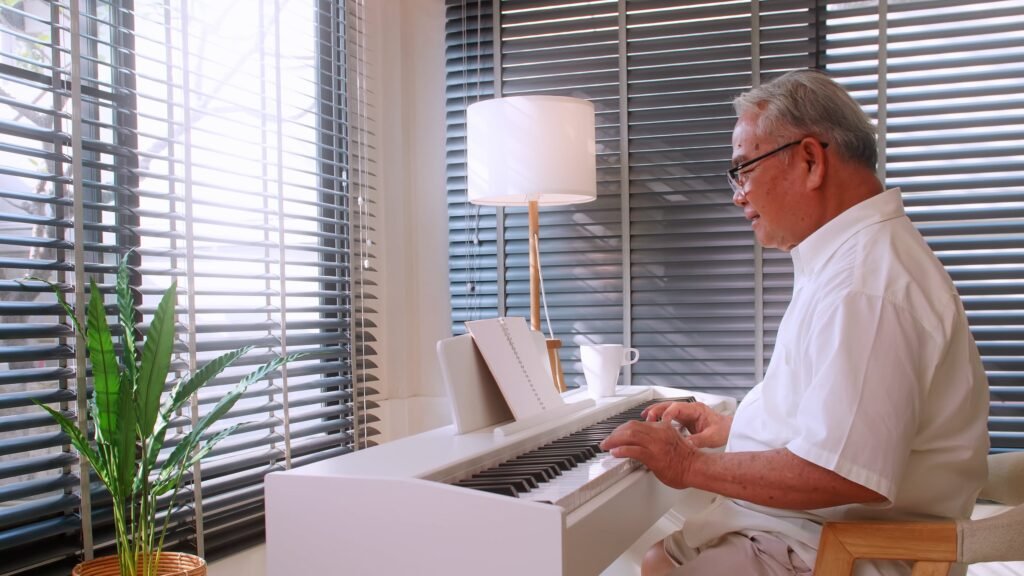
Keys to Memories: How the Piano Helps Alzheimer’s Patients Rediscover Harmony

In the intricate tapestry of Alzheimer's disease, where memories fade and cognitive functions decline, the piano emerges as a beacon of hope, offering solace and stimulation to those navigating the challenging terrain of dementia.
Read More

Navigating the Melodic Map: The Significance of Sheet Music

In the grand symphony of music, sheet music stands as the conductor's baton, guiding musicians through a labyrinth of notes and rhythms to create harmonious masterpieces.
Read More

Schedule a free trial lesson with us

Submit your information and we will contact you!

Schedule a free trial lesson with us 🎉

Submit your information and we will contact you!

Leticia Pinto

Piano instructor

Ms. Leticia Pinto is a distinguished piano instructor at Piano Life Academy, originally from São Paulo, Brazil. Her musical journey commenced at the age of 9, instilling in her a deep passion for the piano.

Having completed her piano studies at the prestigious Etelvina Ramos Vianna conservatory in São Paulo, Ms. Leticia embarked on a career as an environmental engineer, dedicating 24 years to the field. Throughout her engineering tenure, she maintained a fervent commitment to education.

Ms. Leticia holds a degree in pedagogy with a specialization in psychomotricity, recreation, and educational games for children, reflecting her comprehensive approach to teaching. As an accomplished pianist, she continuously refines her technique and interpretation under the guidance of Dr. Lima.

Beyond her musical pursuits, Ms. Leticia is actively engaged in neurodivergent music education. Collaborating with Professor Etna Gutierres in Brazil and the Berkeley Institute for Accessible Arts Education, she strives to create a more inclusive music education environment.

Her love for children is evident in her teaching philosophy, incorporating innovative methods to cater to diverse learning styles. Ms. Leticia Pinto is a dedicated educator, bringing a wealth of experience and passion to the students at Piano Life Academy.

Olga Flanagin

Piano instructor

Olga Flanagan is a highly accomplished piano instructor and accompanist with over 17 years of teaching experience and a rich background in both traditional and Suzuki piano methodologies. Educated in Russia, she holds a Master’s degree in Music from the State University of Art & Music in Saint Petersburg and has extensive experience working with students of all ages, from young beginners to advanced performers. Before moving to the U.S., Olga worked as a piano accompanist for ballet and opera studios, further refining her expertise in classical music. In America, she successfully established her own piano studio and has since been dedicated to nurturing students’ musical growth, preparing them for performances and competitions with remarkable success. Olga has also worked as an accompanist for renowned Russian opera performers, bringing a deep appreciation for vocal collaboration to her teaching. It´s an honor to have Mrs. Olga as one of the teachers at Piano Life Academy, where she continues to inspire students with her passion for music theory, technique, and expressive artistry.

Saranya Murthy

Piano instructor

Saranya Murthy is certified in Level 9 Piano from The Royal Conservatory of Music and is actively working towards her A.R.C.T. certification under Dr. Lima’s tutelage. Saranya began taking piano lessons at the age of five and discovered a keen enjoyment in practicing and performing. She developed a more intense dedication to the art as a young adult under the tutelage of Mr. Csaba Inokai, earning awards such as “Musician of the Year.” Saranya continued working towards her Level 8 certification while pursuing her Bachelor of Mathematics in Honours Computer Science, her M.B.A. in Finance and her career as a Software Quality Assurance Analyst. After moving to Texas, Saranya completed her Level 9 certification with First Class Honours in Practical and First Class Honours with Distinction in Theory. In addition to the piano, Saranya also plays the flute and has been a member of a flute choir. As a Piano Life Academy instructor, Saranya enjoys combining her natural instincts for teaching young children with her passion for music. She is often reminded of her Grade 8 teacher’s parting words to the class – “You are my greatest teachers.”